Playbooks · 3 min read
Anthropic Goes Public on Nasdaq as ANT. Buyers Gain Leverage
Anthropic trades on Nasdaq as ANT after Q3 revenue of $17B, up 47%, with compute costs at 58% of revenue and a $567M operating loss. Here is how enterprise buyers should use that.
Key takeaways
- Anthropic now trades on Nasdaq under ticker ANT.
- Q3 revenue rose 47% to $17 billion; a $974M Q2 operating profit became a $567M loss.
- Compute and infrastructure costs climbed from 48% to 58% of revenue.
- Models released in the six months to September 30 generated over 80% of Q3 revenue.
- Cloud marketplaces account for 48% of revenue; top five customers contributed about 25%.
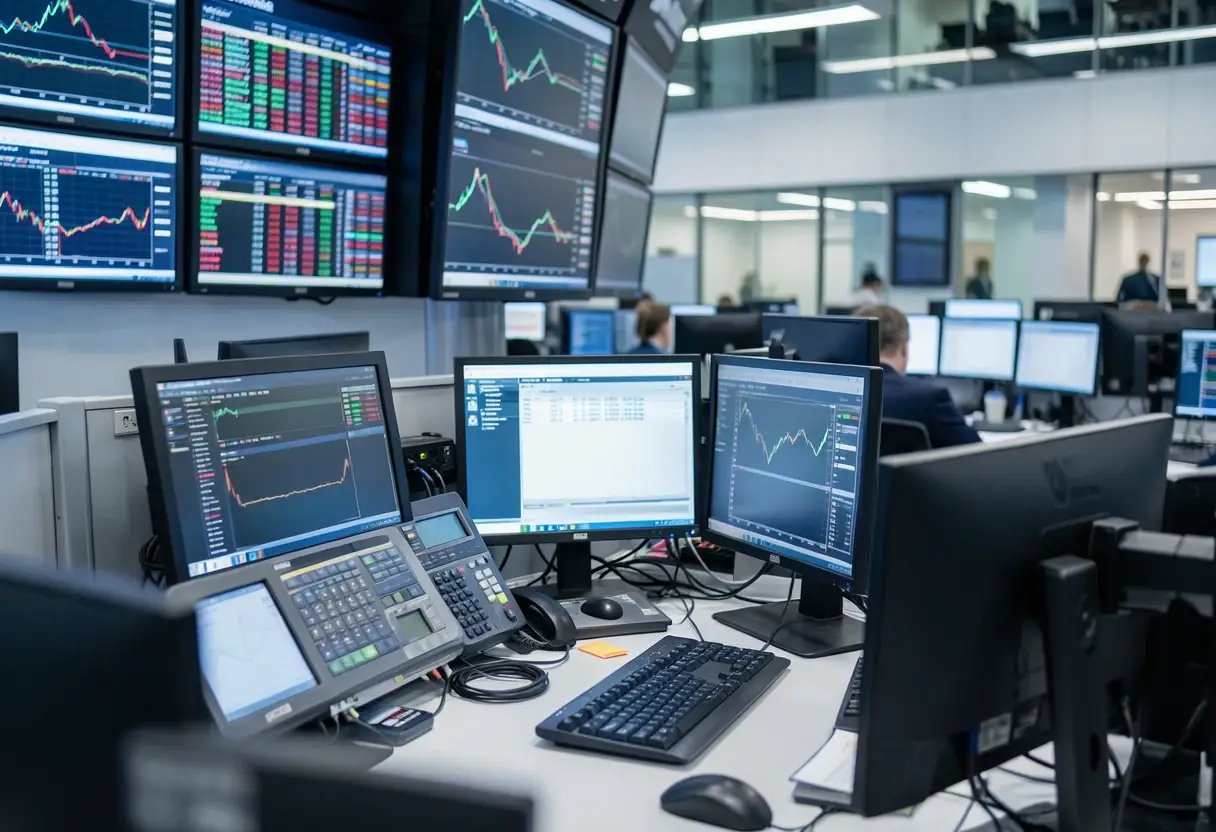
Anthropic now trades on Nasdaq under the ticker ANT, and the move from private promises to public accountability hands enterprise buyers a quarterly window into whether frontier AI economics actually work. The company's S-1, filed in October, laid out the bind in plain numbers: third-quarter revenue rose 47% to $17 billion, while compute and infrastructure costs climbed from 48% to 58% of revenue, and a $974 million second-quarter operating profit swung to a $567 million loss.
That swing is the story. A company that needs volume to justify massive compute commitments must win enterprise workloads on terms it does not fully control. Anthropic needs your workloads nearly as much as you need its intelligence, and that tension is now negotiable in ways it was not six months ago.
What should buyers negotiate first?
The S-1 reveals where the pressure sits. Cloud marketplaces account for 48% of Anthropic's revenue, which means many buyers already hold leverage through existing AWS, Google, or Microsoft spend commitments. The top five customers contributed roughly 25% of revenue in the first nine months of the year, underscoring how concentrated the large-enterprise relationships are.
The practical playbook from the analysis:
- Negotiate on cost per completed task, not just token prices.
- Ask for volume discounts and model-upgrade terms.
- Push for flexible usage limits and benchmark-based pricing reopeners.
- Secure rollover of unused commitments and guaranteed model-support periods.
- Demand uptime-linked service credits.
Routing, caching, and smaller models are lowering serving costs even as large compute commitments push Anthropic to grow consumption. As more routine enterprise tasks shift to cheaper models, frontier capabilities concentrate on higher-value work. That concentration is why per-task pricing matters more than per-token pricing.
Does the IPO slow the frontier race?
No. The S-1 states that models released in the six months to September 30 generated more than 80% of third-quarter revenue. Anthropic does not just need good models; it needs a steady stream of new good models, and it will keep shipping them.
What this means for your stack: expect faster model turnover, not stability. Keep a second frontier platform production-ready, and design contracts and architecture so switching stays cheap. One vendor is not enough. The hyperscalers are building their own frontier platforms, open-weight models keep closing the gap, and pricing and usage policies change quarter to quarter.
Are you buying a model or a platform?
The old comparison shopping — largest context window, lowest token cost, best answers — still matters, but not in isolation. Buyers now have to evaluate models against the value of the task, the enterprise data available, the agents the models power, and the company's broader model strategy. As agents orchestrate work across applications, data, and people, frontier AI is becoming the next operating system for enterprise software.
That raises the due-diligence bar. The resilience questions to answer before signing:
- Can you switch providers if the platform fails?
- What does the SLA pay out, and will Anthropic publish outage postmortems?
- Can you move your agents, prompts, and data elsewhere?
- Have you tested your AI business continuity and disaster recovery plans?
Treat resilience, portability, security, and governance as core buying criteria — particularly given the tech outages and network modernization failures of the past week.
The bottom line
Public markets impose quarterly discipline on a company whose newest models drove 80% of revenue in one quarter, whose compute costs absorb 58 cents of every revenue dollar, and whose five largest customers carry a quarter of the business. Every one of those figures is leverage at the negotiating table. The real test begins now: whether Anthropic can turn demand for AI into durable AI economics — and whether it can revolutionize knowledge work sustainably while doing it.
Forrester Blogs (Source)
More from Daniel Okafor
Show full bio
Market editor covering people, launches and day-to-day practice in AI-native marketing practice at Vibe Marketing.
14 articles